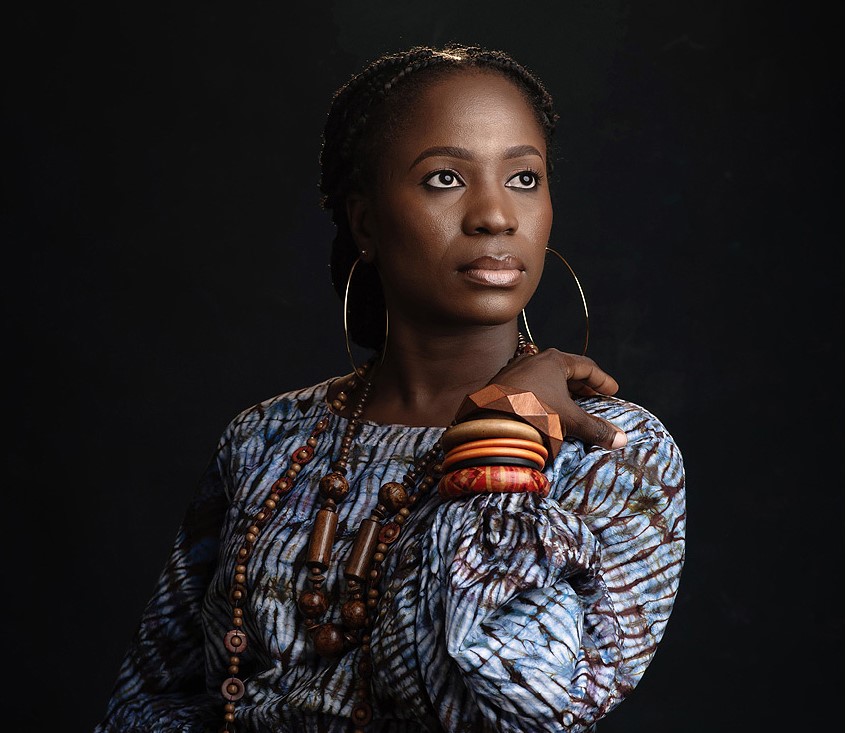
Judith Dyeme Daduut is a contemporary Nigerian artist, sculptor, photographer, researcher, and educator whose artistic practice is distinguished by its engagement with mental health, memory, identity, and social realities. Born and raised in Jos, Plateau State, Nigeria, Daduut holds a Bachelor of Fine Art degree from Ahmadu Bello University, Zaria, Kaduna State, Nigeria, and a Master’s degree in Art and Design from Birmingham City University, United Kingdom. She is currently pursuing a Ph.D. in Sculpture at Ahmadu Bello University, Zaria, while also serving as a lecturer in Sculpture section in the Department of Fine and Applied Arts, University of Jos.
As a multidisciplinary artist, Daduut works across sculpture, photography, installation, and participatory art practices. Her work is inclined toward the psychological and emotional realities that shape human existence. Through her artistic explorations, she addresses issues relating to mental health, emotional well-being, trauma, and the complexities of human thought processes. Her evolving body of work investigates subjects such as depression, post-traumatic stress disorder (PTSD), anxiety, isolation, and suicide, creating visual experiences that encourage reflection, empathy, and dialogue. At the core of Daduut’s artistic philosophy is the belief that art can serve as a powerful medium for understanding and communicating the often invisible dimensions of human experience. She views creative practice as a bridge between personal narratives and broader societal concerns, using art to foster conversations around mental health while challenging the stigma that often surrounds psychological struggles in contemporary society.
One of the most compelling aspects of Daduut’s practice is her engagement with installation art. Through immersive spatial arrangements, she creates environments that allow viewers to encounter and reflect upon emotional and psychological states. Her installations move beyond conventional sculptural forms, transforming physical spaces into sites of contemplation, vulnerability, and engagement. A notable example is her installation titled Room 214, a work that explores the lived realities of mental illness. The installation communicates feelings of discomfort, confinement, and emotional isolation through a stark industrial aesthetic. The mesh-wrapped bed at the center of the work evokes a sense of vulnerability and restriction, while the cold metallic materials create an atmosphere of unease. The black fabric draped across the structure suggests both concealment and protection, symbolizing the complex ways individuals navigate emotional pain. Accompanied by a bedside lamp and journals, the installation references introspection, memory, and personal expression, inviting viewers into an intimate psychological space. Through Room 214, Daduut successfully transforms ordinary objects into potent metaphors for mental struggle, resilience, and the search for healing.
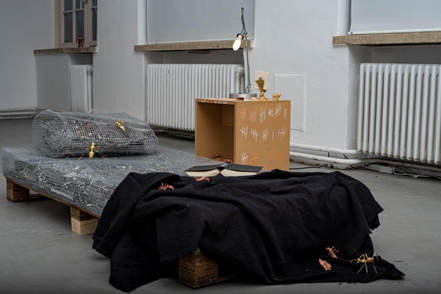
Room 214, Judith Dyeme Daduut, Installation, 2024
Beyond her studio practice, Daduut’s work demonstrates a strong commitment to community engagement and socially responsive art. In 2024, she was selected as a Goethe-Institut Connecting the Dots Research Fellow at the Slave History Museum in Calabar, Cross River State, Nigeria. During the fellowship, she explored the intersection of art therapy, museum education, and historical memory. Through participatory clay workshops, she engaged museum visitors in creative activities that encouraged reflection on the history of the transatlantic slave trade. Rather than positioning audiences as passive observers, Daduut invited them to become active participants in the process of remembering and interpreting history. Visitors were encouraged to create clay objects inspired by their museum experience, regardless of their artistic background or technical skill. This innovative approach not only developed audience engagement with the museum’s collections but also provided an accessible and therapeutic means of processing difficult historical narratives. By combining storytelling, art-making, and historical education, Daduut demonstrated how creative practice can facilitate learning, healing, and collective remembrance. As such, one of the outcomes of this fellowship was Reflections, a clay-based project that embodies her interest in memory, participation, and emotional engagement. The work highlights the transformative potential of art as a tool for connecting individuals with both personal and collective histories. Plate 2 for Reflections.
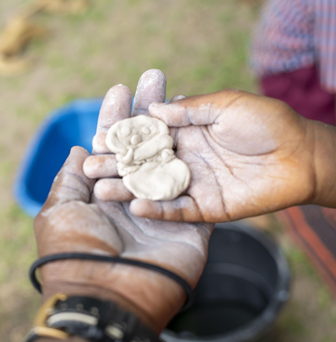
Reflections, Judith Dyeme Daduut, Sculpture, 2024
Building on the success of this initiative, Daduut received a Goethe-Institut Lagos Post-Connecting the Dots grant in 2024. Working collaboratively with a team of creatives, she contributed to the redesign and visual enhancement of the Slave History Museum through the development of contemporary illustrations and animations depicting the history of the transatlantic slave trade. This project brought historical narratives into dialogue with contemporary visual culture, making them more accessible to diverse audiences. Additionally, in the same year, Daduut expanded her international profile as a Guest Lecturer and Artist-in-residence at the Hochschule für bildende Künste Hamburg (HFBK), Germany, through the Artist School Alliance (ASA) programme. During her residency, she facilitated weekly seminars and mentoring sessions that culminated in a collaborative student exhibition presented as part of the institution’s graduate show. Her participation further reinforced her commitment to artistic exchange, education, and cross-cultural dialogue.
As a practicing artist, Daduut has participated in numerous exhibitions, residencies, workshops, and fellowships within and outside Nigeria. Some notable exhibitions include DOORS and ASA Open Studios at Hochschule für bildende Künste Hamburg, Germany (2024); Arewa Me Too, an Apex Art Open Call Exhibition at the Yasmin El-Rufai Foundation, Kaduna (2022); Upcycling Redefined at Transcorp Hilton, Abuja (2021); and the prestigious Rele Young Contemporaries exhibitions organized by Rele Art Gallery, Lagos (2020). These exhibitions reflect the growing recognition of her work within both national and international contemporary art circles. Similarly, Daduut’s artistic excellence has also earned her several notable awards and recognitions. Among them are the Ikon Gallery Art Prize for her Master’s Degree programme at Birmingham City University, the Life in My City Art Festival (LIMCAF) Award for Best Sculpture/Ceramics/Installation, and the LIMCAF Outstanding Young Lady Award. These honours shows the significance of her contributions to contemporary art and her commitment to using creative practice as a means of social engagement and cultural transformation. Through her multidisciplinary practice, Judith Dyeme Daduut continues to push the boundaries of contemporary African art. Whether through sculpture, photography, installation, participatory projects, or educational initiatives, she consistently demonstrates how art can function as a platform for reflection, healing, dialogue, and social change. Her work not only gives visual form to complex mental and emotional experiences but also creates spaces where individuals and communities can engage with difficult subjects, imagine possibilities for healing, and participate in meaningful conversations about the human condition.