Samuila, Ezra Rabo
Introduction
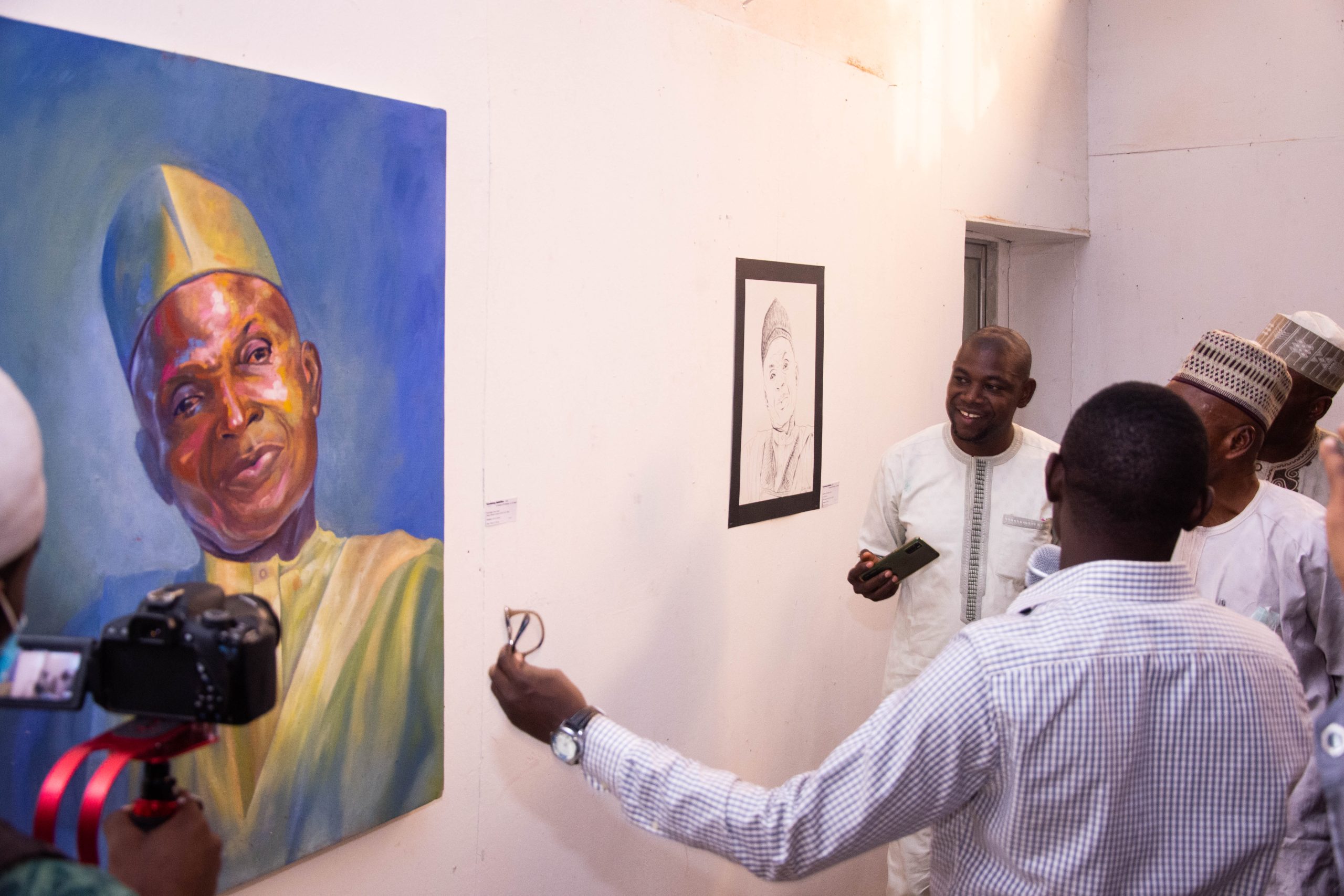
A collaboration between the Department of Fine Arts, Ahmadu Bello University, Zaria, and the National Gallery of Art, Abuja, resulted in an art exhibition that took place sometime in May 2017. The selected artworks for the exhibition were first displayed at the Open Gallery of the Department of Fine Arts. The participants included lecturers, postgraduate students, and undergraduate students. Also, some works by former students were selected by the exhibition panel to show continuity in the evolving and often debated trends and styles associated with the Zaria Art School.
Highlights of the Exhibition and Some the Artworks
As viewers approached the exhibition venue, they were greeted by fifty-seven artworks, made up of forty paintings (40), fourteen sculptures (14), and three drawings (3). One of the most striking aspects of the display was the diversity of materials, styles, techniques, and themes presented by the artists. The display also served as preparation for the main exhibition scheduled to be held later in May 2017 in Kaduna. It featured both old and recent works from the Department of Fine Arts, Ahmadu Bello University. One of the oldest paintings on display was a figurative work produced in 1969 by Clary Nelson Cole. Interestingly, the use of colour and brushwork in the painting shared similarities with some of the more recent paintings on display. This similarity may encourage continued debates about whether the Zaria Art School possesses a recognizable style, despite arguments by members of the school who reject such classification.
The older works, which were mainly paintings, could easily be identified through their simple framing techniques, faded colours, and visible stains caused by age. During the exhibition, Professor Jerry Buhari, alongside staff members of the National Gallery of Art, explained that framing received less attention in earlier years than it does today. Simple wooden battens were commonly used, unlike contemporary framing methods, where frames have become an important part of the presentation of artworks. He noted that some frames today even cost more than the artworks themselves. Despite the aging of these older paintings, their expressive brushstrokes still reflected qualities often associated with paintings from Zaria.
Among the paintings on display was “Where is Our President?” by Emmanuel Wesley Okachi. The work responded to the political situation in early 2017 when the Nigerian president, Muhammadu Buhari travelled to London for medical treatment. During this period, many Nigerians became uncertain about the president’s health due to limited and conflicting information from the presidency. The painting is dominated by blue hues, interrupted by strokes of orange and pink. The elongated and overlapping figures appear motionless, as though waiting for an event or announcement. The blurred treatment of the figures and environment creates a feeling of uncertainty and tension. According to the artist, the elongated figures represent people from different regions of Nigeria, all united by anxiety and concern over the situation. The painting serves as an allegory of the national mood at that moment and reflects a situation many viewers could easily relate to. See plate i, “Where is Our President?”.
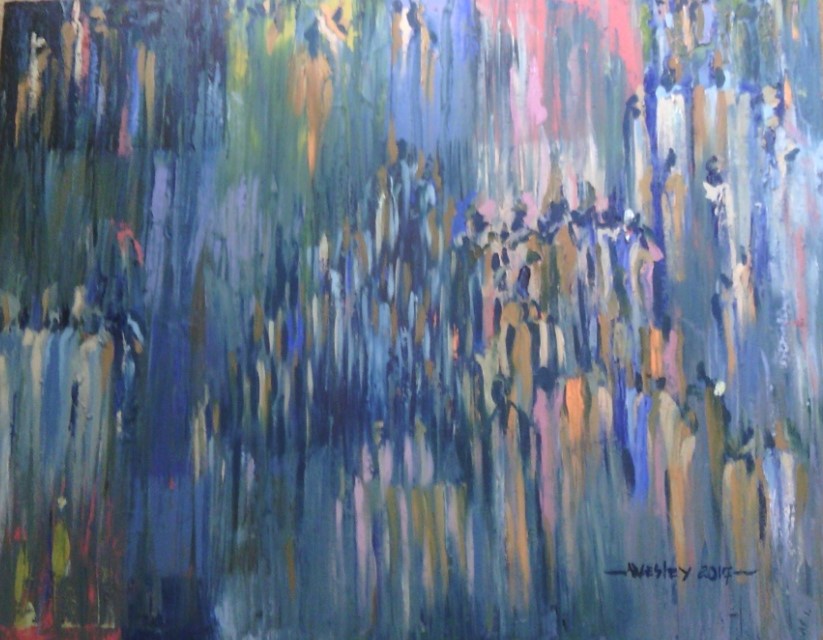
Plate i: Where is Our President?, Oil on Canvas, 100cm x 81cm, Wesley Okachi, 2017. Photographed by Samuila, Ezra Rabo
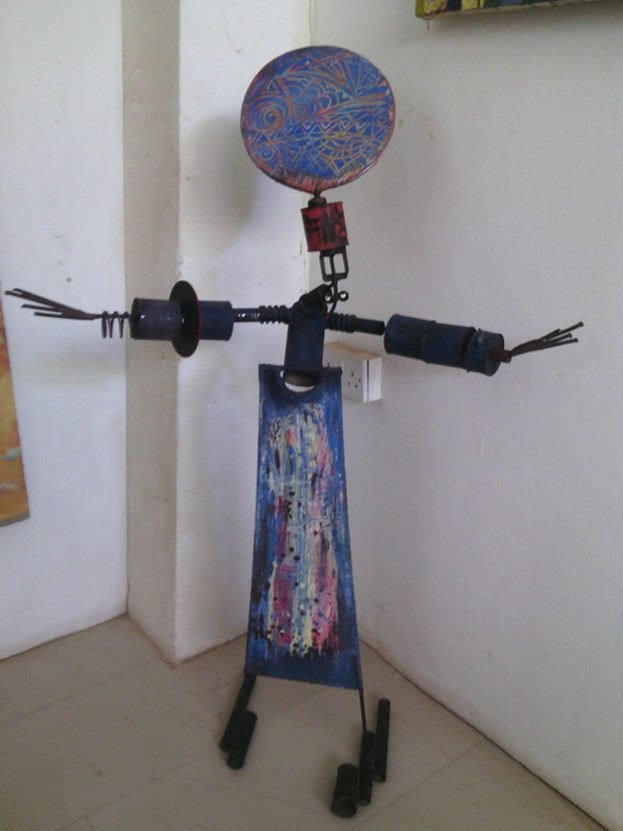
Beyond the paintings, the exhibition also featured sculptural works executed in different media and styles. The sculptures of Lamidi Lasisi stood out because of their lively and energetic presence. One of his works, Celebration (Dance Series), captured a festive mood through the use of found metal objects, fabric, and paint to depict dancing human figures. The sculpture attracted viewers not only because of its size but also because of the artist’s creative combination of materials. The painted fabric on the sculpture also revealed the artist’s connection to painting, possibly reflecting the influence of his late uncle, the renowned artist Gani Odutokun. See plate ii, for Lamidi’s work titled Celebration (Dance Series),
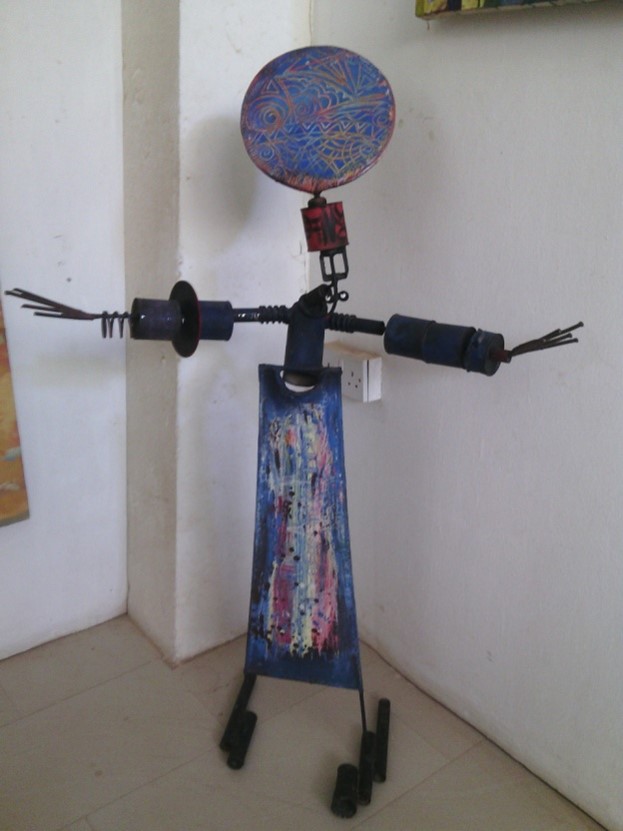
Plate ii: Celebration (Dance Series), Found objects, Fabric and Paints, 50cm x 30cm, Lasisi Lamidi, 2010. Photographed by Samuila, Ezra Rabo.
Also included in the display were Kevin Damden’s cubist-inspired sculptural figures constructed with triangular forms, as well as wood carvings by postgraduate students. These works demonstrated that many sculptors still value wood as a medium despite the demanding processes involved in carving it. Drawings were also carefully arranged on exhibition boards, adding further richness to the display. After viewing the exhibition, one could easily leave with a sense of satisfaction due to the variety of artworks presented. The diversity in form, composition, materials, styles, and techniques ensured that viewers with different artistic interests could find works that engaged and inspired them. Overall, the exhibition successfully highlighted the creative strength, continuity, and evolving nature of artistic practice within the Department of Fine Arts, Ahmadu Bello University, Zaria.